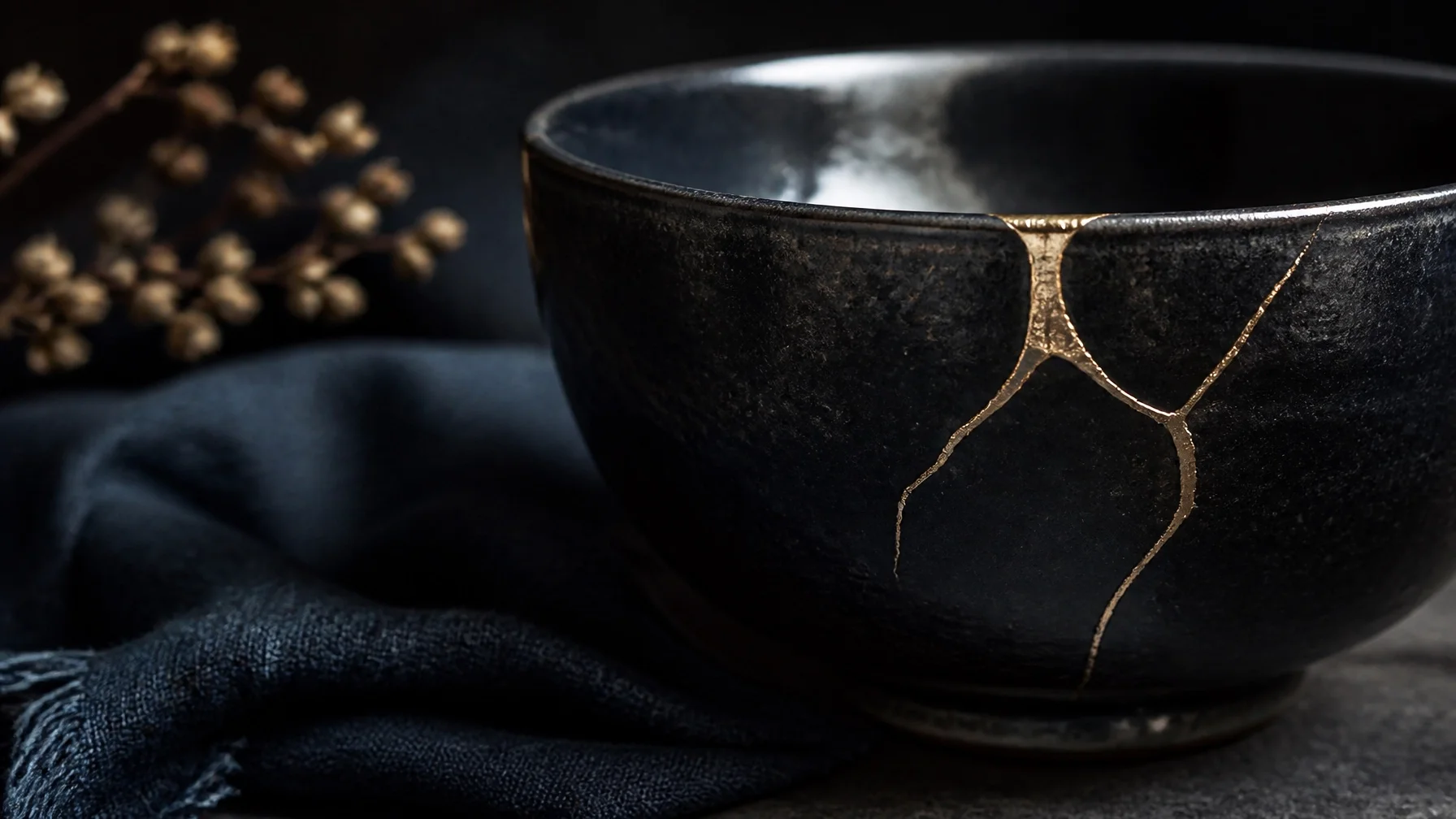
Before I ever finished writing The Fall, I found myself thinking about kintsugi, the Japanese art of repairing broken pottery with gold.
Instead of hiding the cracks, kintsugi celebrates them. The bowl isn't returned to the way it was before. Its history becomes part of its beauty.
That idea stayed with me throughout Claire's story.
Healing doesn't erase what happened to us. It changes how we carry it.
When the Wounds Aren't Visible
One of the reasons I wanted to write The Fall was because emotional abuse is often difficult to recognize. There are no casts, stitches, or bruises that tell the world someone is hurting.
Instead, it slowly changes how a person sees themselves.
Confidence begins to disappear.
Self-doubt grows louder.
Eventually, someone may question their own thoughts, memories, and worth.
Those invisible wounds deserve to be talked about just as much as the ones we can see.
Healing Takes Time
Kintsugi isn't about hiding damage. It's about carefully rebuilding something that has been broken.
Healing works much the same way.
It rarely happens all at once. It isn't one conversation or one turning point that suddenly makes everything better.
It's choosing to keep going.
It's learning to trust yourself again.
It's accepting that progress isn't always a straight line.
Those small moments are often where the real healing begins.
Claire's Story
Claire doesn't simply survive emotional abuse.
She has to learn who she is without it.
She has to rebuild her confidence, trust her instincts again, and believe she deserves something better than the life she had accepted.
That process isn't quick or easy.
There are setbacks.
There are fears.
There are moments when moving forward feels impossible.
But that's what I wanted The Fall to reflect.
Healing isn't perfect.
It's personal.
The Beauty of the Cracks
One of the reasons I love the philosophy behind kintsugi is because it doesn't pretend the damage never happened.
The cracks remain.
They become part of the story.
I think people are much the same.
The experiences that shape us don't disappear. They become part of who we are. They teach us compassion, resilience, and empathy in ways comfort never could.
That doesn't mean trauma is something to celebrate.
It means healing deserves to be.
More Than Surviving
I never wanted The Fall to be remembered simply as a story about emotional abuse.
I wanted it to be remembered as a story about hope.
About courage.
About discovering that your past doesn't have to decide your future.
That's what kintsugi reminds me every time I see a repaired bowl.
The cracks are still there.
But so is the strength it took to mend them.
If Claire's story encourages even one reader to believe that healing is possible, then writing The Fall was worth every page.
Warmly,
Tina Messineo